
Her Wines
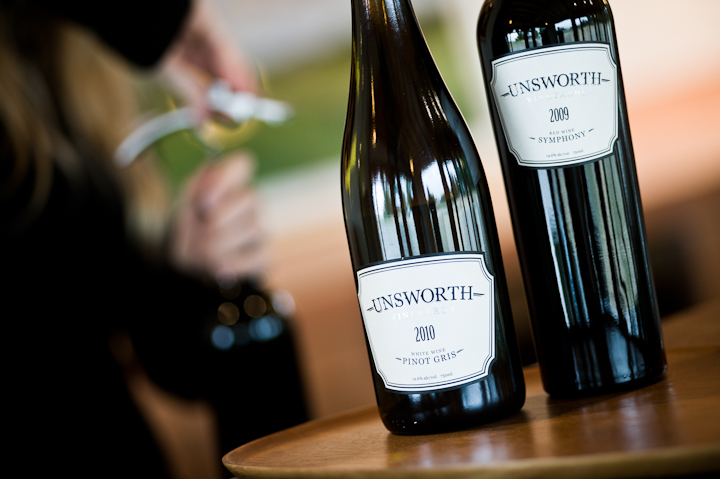
Canada is considered to be a cool climate country. Viticulture temperatures during the fruit-ripening phase are moderate and consistent with long hours of sunshine ideally suited for the growing of Chardonnay, Pinot Noir and Riesling. Wines from cooler climates are characteristically higher in acids and highly aromatic. These high acids result in wines, particularly white wines, with longer natural aging potential. Winemakers believe that cool climates produce lighter, fruitier wines whereas hotter regions produce less fruity, heavier wines.
While most of Canada is too cold for grape growing, Canadian wines are produced in Southern Ontario and Southern British Columbia. The two largest wine producing regions are the Niagara Peninsula in Ontario and the Okanagan in British Columbia's Interior. Other wine producing areas include the shores of Lake Erie in Ontario, and the Fraser River Valley in BC's Lower Mainland and southern Vancouver Island and the Gulf Islands in British Columbia. There are small scale productions of grapes and wine in southern Quebec, Prince Edward Island , Newfoundland and Nova Scotia . The Canadian wine industry also vinifies imported grapes and juice. Icewine , which can be produced reliably in most Canadian wine regions, is the most recognized product.
It should be noted that Canadian winemakers are pioneers. They are willing and eager to try new varieties to see how the vines progress. In the southern Okanagan, Merlot has emerged as a quality wine. In the north Ortega has been successful. New areas are opening with hard working owner, vineyard managers and winemakers extend the know boundries.
Pioneering vintner Johann Schiller domesticated the native labrusca grapes, planting a small vineyard in 1811 near present-day Mississauga, Ontario. He became known as the father of Canadian wine.
When Inniskillin first won the coveted Grand Prix d'Honneur at Vinexpo in Bordeaux, France for their 1989 Icewine, the seal of international approval for the bounty of Canadian viticulture was guaranteed.
In 1997, the Cool Climate Oenology and Viticulture Institute [CCOVI] at Brock University in Ontario became the first research centre in the world dedicated to growing grapes and making wine in cool climates. The University of British Columbia also has a research centre dedicated to wine.
Worlds Best
Jackson-Triggs Okanagan Estate Grand Reserve Shiraz 2004, has surpassed Australia and all other countries to take the award as “Best Shiraz Worldwide” at the prestigious IWSC in London England . This is a milestone not only for Jackson-Triggs, but for the Canadian wine industry as it is the first time that a Canadian red table wine has ever been awarded a trophy at this competition.
This win is an incredible honour for winemakers Bruce Nicholson, Brooke Blair, Derek Kontkanen and Rob Scapin along with viticulturists Mark Sheridan and Troy Osborne. Please join me in wishing congratulations to the entire Jackson-Triggs team across the country on this tremendous achievement!
The following is reproduced from the Canadian Broadcasting Corporation' s websiteIntroduced in 1971, Andrés Baby Duck became the most popular wine in Canada, selling eight million bottles a year at its peak
in 1973. As of late 2003, it was still widely available across Canada. The Liquor Control Board of Ontario sells a 1.5 litre bottle for
$11.95 and recommends serving it "chilled, with animal crackers."
• Baby Duck was officially launched in London in October 1979. At the posh launch party, Canada's high commissioner to Britain,
Paul Martin, raised a crystal glass of Baby Duck.Part of the accessibility of Baby Duck lay in its pronounceable name. In the early 1970s other products competing for the same
market included Baby Bear, Baby Deer, Little White Duck, Fuddle Duck, Luv-a-Duck, Pink Flamingo, Pussycat and Gimli Goose.
• In 1980, Andrés marketers downgraded Baby Duck from a wine to a "refreshment beverage" in an attempt to distinguish it from table wineCider
Cider is an alcoholic beverage made mainly from the fermented juice of apples, though pears can be used. In the UK, pear cider is known as perry. In the USA and parts of Canada, the term cider almost exclusively refers to nonalcoholic apple juice (apple cider). The phrase hard cider is used to denote the fermented version. Please see Cider.
Mead
Mead, often referred to as honey wine, is an alcoholic drink made by the fermentation of honey. Mead is, in all likelihood, the oldest alcoholic beverage known to mankind. Before agricultural techniques were developed, humans were traditionally hunters and gatherers. After gathering honey from the hive, the natural yeast and high moisture content would cause the honey to ferment, producing mead. It is no wonder mead is often referred to as ‘the nectar of the gods', as its appearance seemed miraculous. Please see Mead.
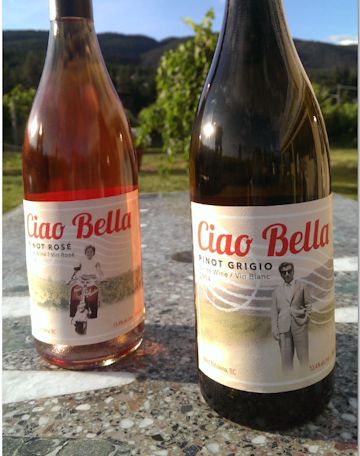
Have a question contact us Wines of Canada
* Wine Author John Schreiner
.1 Sandra OldfieldHome | Sitemap | Advertise | Contact | Wineries | Wine Terms | ©2020 Robert Bell